
LFP vs NMC: Choosing the Best Lithium Battery for Your Energy Storage Needs
If you are considering battery storage for an off-grid home or a business, you have probably come across two common lithium-ion chemistries: Lithium Iron Phosphate (LFP) and Nickel Manganese Cobalt (NMC). This guide compares them in plain language so you can weigh energy density, lifespan, safety, cost, and environmental impact.
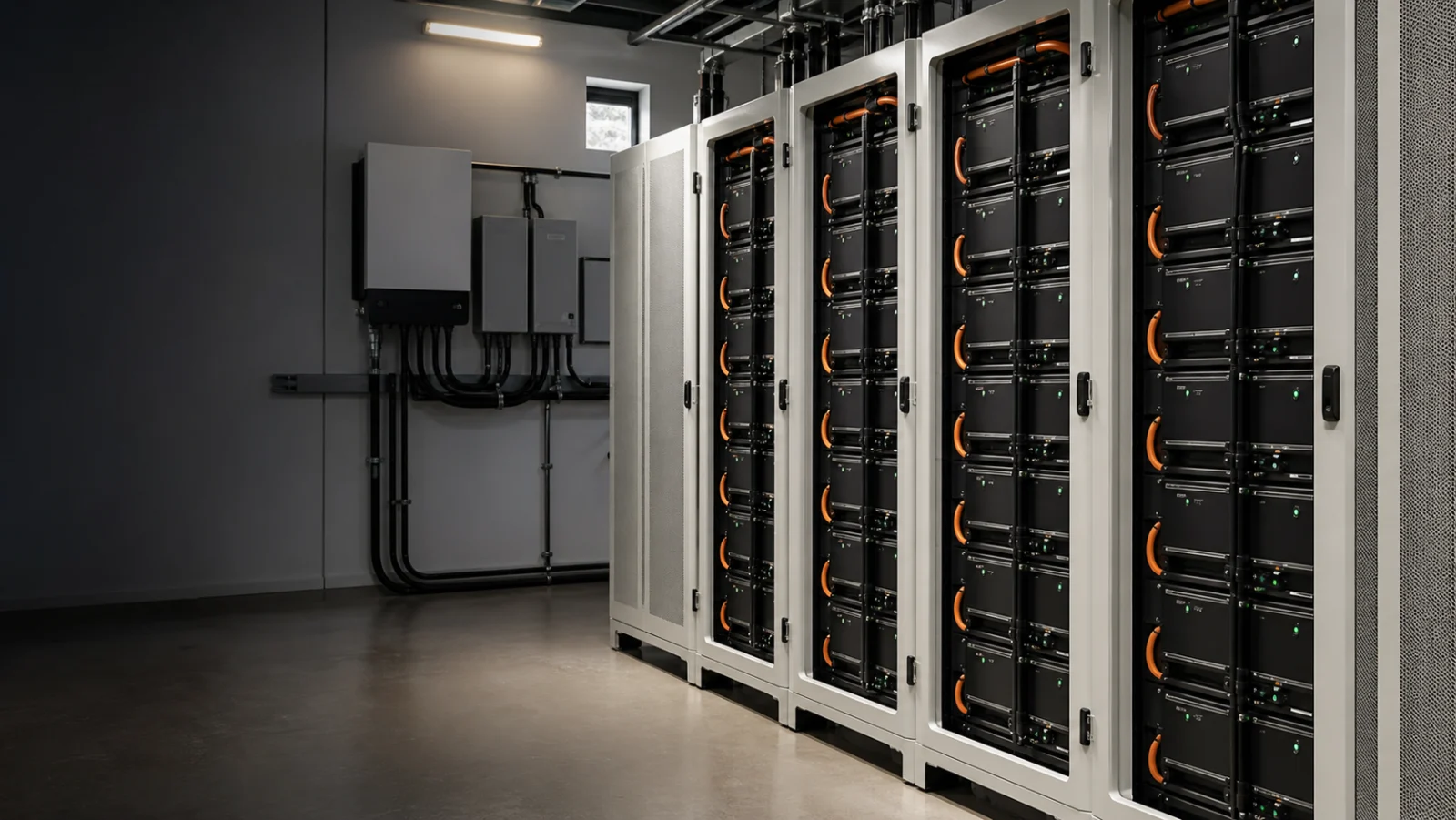
Designed for stationary storage decisions
This guide is focused on off-grid homes, backup power, and business storage systems where battery chemistry affects safety, lifespan, and long-term value.
Introduction
LFP batteries, also known as LiFePO4, use a lithium iron phosphate cathode and are known for stability and long life. They have become a top choice for stationary solar energy storage, off-grid power systems, and other applications where safety, durability, and a long lifespan matter most.
NMC batteries use a nickel, manganese, and cobalt cathode blend. They are compact and capable, which makes them useful where space or weight matters. The trade-off is that they generally do not last as long as LFP in daily-cycle stationary use.
What this guide compares:
- Lifespan and cycle life
- Safety and thermal stability
- Energy density and footprint
- Upfront and long-term value
- Environmental impact
Lithium Iron Phosphate (LFP) Batteries
LFP batteries are valued for their stability and long service life. For stationary solar storage, the practical advantage is not the chemical formula alone; it is how calmly the battery behaves through years of daily charging and discharging.
Chemistry snapshot
Lithium iron phosphate is the modern off-grid baseline.
LFP avoids nickel and cobalt, tolerates deeper cycling, and keeps charge behavior simple for homes and cabins that need dependable stored energy without a maintenance routine.
Pros
- Long lifespan, often 3,000 to over 7,000 cycles
- Enhanced safety and resistance to thermal runaway
- Lower environmental impact because it uses no cobalt or nickel
- Stable performance in deep-cycle use
- Low cost per cycle over time
Cons
- Lower energy density than NMC
- Slightly lower specific power
For stationary use, the larger footprint is usually a reasonable tradeoff for the safety and lifespan benefits.
Bottom line: for off-grid homes and daily-cycled storage, LFP is usually the safer and better long-term value choice.
LFP Longevity
A lithium iron phosphate battery rated at 6,000 cycles and used at 50% depth of discharge per day can provide functional maintenance free energy storage for 12,000 days, or about 32 & 1/2 years.
Quick calculator
Assumes one discharge and recharge per day at the selected depth of discharge. A 100% depth of discharge equals one full cycle; 10% depth of discharge equals 0.1 cycle. Actual service life also depends on temperature, charge rate, battery management, and manufacturer end-of-life limits.
Nickel Manganese Cobalt (NMC) Batteries
NMC batteries are known for high energy density and solid all-around performance. They can be a smart choice when more energy needs to fit into a smaller or lighter battery package.
Chemistry snapshot
Nickel manganese cobalt favors compact energy storage.
NMC is a layered lithium nickel manganese cobalt oxide chemistry. It can pack more energy into a smaller battery, but stationary systems usually trade that compactness for shorter cycle life, more thermal management, and more sourcing complexity.
Pros
- High energy density, about 50-70% more than comparable LFP
- Strong performance and fast charging
- Mature technology with a wide product ecosystem
- Works well where space or weight is limited
Cons
- Shorter lifespan under heavy daily cycling
- Safety considerations and more thermal management needs
- Higher cost and reliance on scarcer materials
- Greater environmental impact than LFP
NMC can still make sense for compact systems, but the trade-offs matter more in stationary storage.
Bottom line: NMC is useful when space is tight or you need a compact battery bank, but it is usually the less durable choice for daily solar cycling.
Which Battery Chemistry Suits Your Needs?
Both LFP and NMC can work for stationary energy storage, but they shine in different areas. Here is the short version.
Choose LFP if…
- You are building an off-grid home or daily-cycled storage system
- You want the safest option for an occupied building
- You care most about long-term value and fewer replacements
- You have enough space for a slightly larger battery bank
Choose NMC if…
- You need to maximize storage in a tight footprint
- You are working with a compact or mobile application
- High energy density matters more than cycle life
- You are comfortable with more battery management attention
The short version: for most off-grid property owners and business energy storage needs, LFP comes out on top because of its safety profile, longer lifespan, and stronger long-term value.
Conclusion
Bottom line: for most off-grid property owners and business storage needs, LFP is the safer, longer-lasting choice. NMC still has a place when you need a smaller footprint or have specific high-power requirements.
In every case, the right battery comes down to the priorities of your project. If you want a workhorse battery that can cycle every day with minimal worry, LFP is likely your best bet. If compact size matters more than longevity, NMC remains a proven option.
Remember: safety and long-term reliability matter most in stationary energy storage.