
Battery technology guide
Lead-Acid vs Lithium Iron Phosphate
Lead-acid batteries powered off-grid homes for decades, but they come with real drawbacks: off-gassing, constant maintenance, short lifespans, and poor efficiency. Lithium iron phosphate (LFP) technology has changed the space completely. This guide walks through the key differences, plus where sodium batteries may fit in the future.
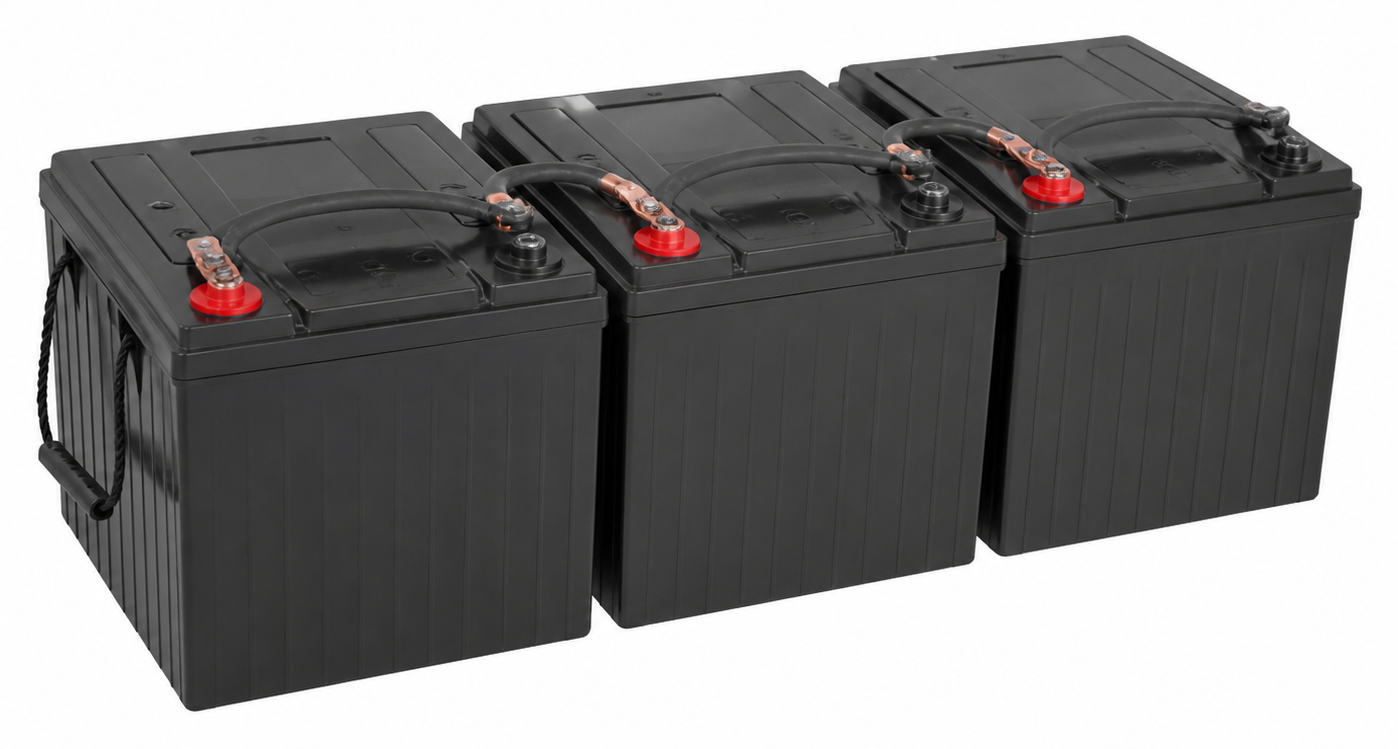
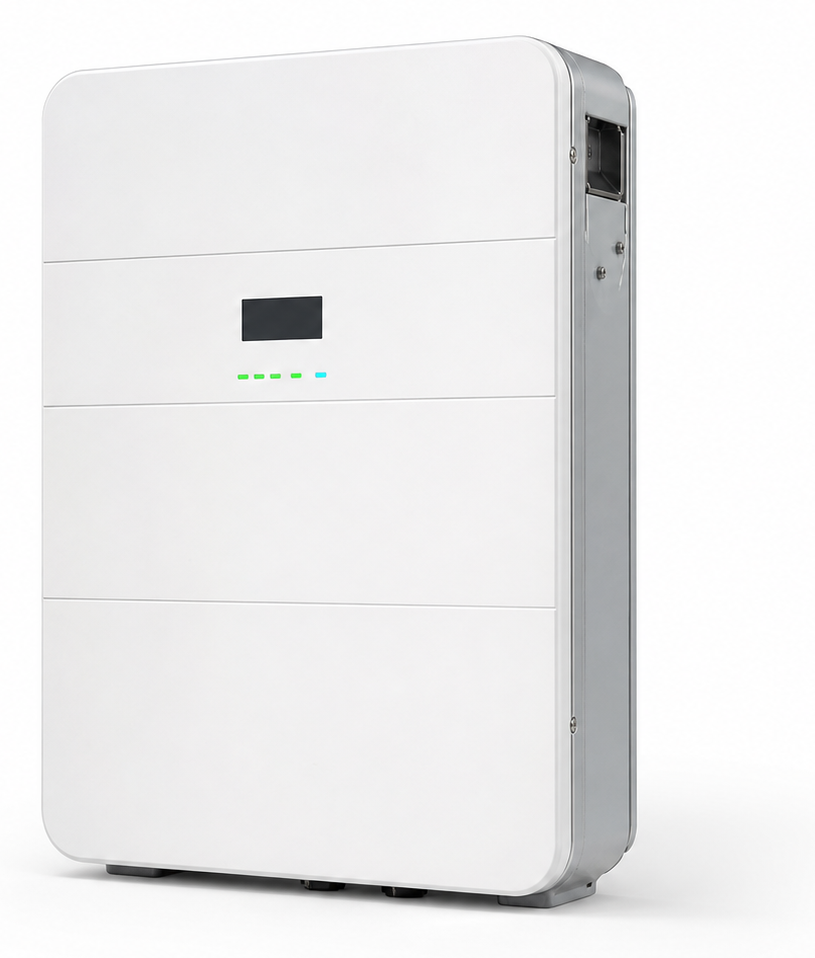
The Problem with Lead-Acid Batteries
Lead-acid batteries have been the default for off-grid energy storage since the technology was first developed in the 1800s. They are relatively cheap up front, widely available, and simple to understand. But once you look past the sticker price, the disadvantages start adding up fast.
Off-Gassing and Safety Hazards
During charging, flooded lead-acid batteries undergo electrolysis that splits water into hydrogen and oxygen gas. This off-gassing intensifies above 80% state of charge and poses a genuine safety risk. Hydrogen becomes flammable at just 4% concentration in air, which is why building codes require dedicated ventilation in battery rooms, typically at least 1 cubic foot per minute of airflow per square foot of floor area. Overcharging can also produce hydrogen sulfide, a toxic and corrosive gas that accumulates in enclosed spaces. For a home battery installation, this means you need a well-ventilated, dedicated space isolated from living areas.
Poor Efficiency and Energy Loss
Lead-acid batteries have a round-trip efficiency of roughly 75-85%, meaning 15 to 25 percent of every kilowatt-hour you charge into the bank is lost as heat, gassing, and internal resistance. That wasted energy translates directly into more solar panels needed to keep up. Internal resistance also climbs as the battery discharges, which compounds the problem under heavy loads. The Peukert effect further reduces usable capacity at faster discharge rates, so a battery rated for 100 amp-hours may only deliver 70-80 amp-hours when powering real household loads. This is worst in the winter, when the batteries are cold, and every bit of energy you harvest from the sun is extremely valuable.
Constant Maintenance
Flooded lead-acid batteries need regular hands-on attention. Electrolyte levels must be checked every two to four weeks and topped off with distilled water. Monthly equalization charges (a controlled overcharge lasting one to four hours) are required to prevent electrolyte stratification and sulfation. Terminals need periodic cleaning to remove corrosion buildup that increases resistance. Off-gassing causes corrosion on battery enclosures and hardware which needs routine cleaning. Skip any of these tasks for a few months and battery life begins to drop measurably.
Short Lifespan and Depth of Discharge Limits
Most lead-acid battery banks last three to five years in daily-cycling applications. Cycle life depends heavily on how deeply you discharge: at 50% depth of discharge (the widely recommended limit) you can expect roughly 500 to 800 cycles. Push to 80% depth of discharge and that drops to 200-300 cycles. This means you can only use about half of your rated battery capacity on any given day if you want the bank to last. Over a ten-year period, you may need to replace a lead-acid bank two or three times, which erodes the initial cost advantage quickly.
Lead-acid at a glance:
- Round-trip efficiency: ~75-85% (15-25% energy loss per cycle)
- Recommended depth of discharge: 50%
- Typical cycle life: 500-800 cycles at 50% DoD
- Calendar life: 3-5 years
- Self-discharge: 4-6% per month
- Energy density: 35-40 Wh/kg
- Maintenance: watering, equalization, terminal cleaning every 2-4 weeks
The LFP Alternative
Lithium iron phosphate batteries (LiFePO4, commonly called LFP) have become the go-to replacement for lead-acid in stationary energy storage. They address every major weakness of lead-acid while delivering performance that was simply not available to homeowners a decade ago.
No Off-Gassing, No Ventilation Worries
LFP cells are sealed units that produce no hydrogen gas during normal operation. There is no electrolyte to spill, no corrosive fumes, and no need for a dedicated ventilated battery room. You can install an LFP battery bank in a garage, utility closet, or basement without the safety concerns that come with lead-acid. LFP chemistry is also the most thermally stable lithium technology available, with thermal runaway temperatures above 800 degrees Celsius compared to 200-300 degrees for other lithium chemistries. This means that the fire risk typically associated with lithium batteries is minimized, making the fire concern, practically non-existent.
Superior Efficiency
LFP batteries achieve a round-trip efficiency of 90-95%, meaning nearly all of the energy you put in comes back out when you need it. Compared to lead-acid’s 75%, that is a difference of 20 or more percentage points on every charge cycle. Over a year of daily cycling, the efficiency gap translates into hundreds of kilowatt-hours of saved energy, fewer solar panels needed, and lower overall system costs. LFP batteries also maintain a remarkably flat discharge curve, delivering steady voltage from nearly full to nearly empty rather than the declining output characteristic of lead-acid.
Virtually Maintenance-Free
Once an LFP system is installed and commissioned, there is very little ongoing upkeep. No watering, no equalization charges, no terminal corrosion to manage. An integrated battery management system (BMS) handles cell balancing, overcharge and over-discharge protection, short-circuit protection, and real-time temperature monitoring automatically. Periodic visual inspections of connections and keeping the area around the battery clean are about all that is needed.
Longer Lifespan and Deeper Discharge
LFP batteries typically deliver 6,000 to 10,000 or more charge cycles before capacity drops to 80% of original rating, and their calendar life is commonly 10 to 15 years. You can safely discharge to 80-100% of rated capacity on a daily basis without the kind of damage that would destroy a lead-acid bank in months. This means you get to use the full capacity you paid for, and the battery bank lasts for the long haul. Self-discharge is also minimal at around 2-3% per month, compared to 4-6% for lead-acid.
LFP at a glance:
- Round-trip efficiency: 90-95%
- Safe depth of discharge: 80-100%
- Typical cycle life: 6,000-10,000+ cycles at 80% DoD
- Calendar life: 10-15 years
- Self-discharge: 2-3% per month
- Energy density: 90-160 Wh/kg
- Maintenance: periodic visual inspection only
Head-to-Head Comparison
The following table puts the key specifications side by side. In nearly every metric that matters for home or business energy storage, LFP comes out ahead.
| Specification | Lead-Acid | LFP (LiFePO4) |
|---|---|---|
| Round-Trip Efficiency | 75-85% | 90-95% |
| Usable Capacity (DoD) | 50% | 80-100% |
| Cycle Life | 300-800 | 6,000-10,000+ |
| Calendar Life | 3-5 years | 10-15 years |
| Maintenance | Watering, equalization, cleaning | Near zero |
| Off-Gassing | Hydrogen gas (flammable) | None |
| Self-Discharge | 4-6% / month | 2-3% / month |
| Energy Density | 35-40 Wh/kg | 90-160 Wh/kg |
| Weight (for 10 kWh) | ~280 kg / 617 lbs | ~80 kg / 176 lbs |
Where Sodium Batteries Fit
Sodium-ion batteries are an emerging storage option that use sodium instead of lithium as the main charge-carrying material. Sodium is abundant and widely available, which could make the chemistry attractive for lower-cost stationary storage as production scales. For now, sodium batteries are best understood as a promising future category rather than the default choice for off-grid homes and backup systems, but this is changing rapidly as new systems are certified and hit the US market.
Potential Advantages
Sodium-ion cells can reduce dependence on lithium, nickel, and cobalt supply chains. They may also perform well in cold conditions and can be designed with strong safety characteristics for stationary energy storage.
Current Tradeoffs
Most sodium-ion products still have lower energy density and a less mature field track record than LFP. That matters for homes, RVs, and job sites where space, weight, warranty support, and serviceability all count.
Sodium batteries are worth watching, especially for future grid-scale and budget-sensitive stationary storage. For today’s residential, off-grid, mobile, and backup projects, LFP remains the more proven recommendation because it combines safety, high cycle life, efficiency, availability, and strong installer support.
The Real Cost Story
Lead-acid batteries used to win on sticker price. At roughly $100-$300 per kWh for the battery alone, they were historically the cheapest way to add storage. That gap has narrowed dramatically: current lithium iron phosphate battery costs can now be around $200-$300 per kWh for the battery, depending on product, supplier, and project requirements. That changes the conversation. LFP is no longer just the premium option that wins later on lifetime cost; in many systems, it is now close enough on upfront battery cost that the safety, efficiency, usable capacity, and lifespan advantages become the main decision drivers.
Cost Per Cycle
A lead-acid bank at $150 per kWh lasting 400 cycles costs about $0.38 per kWh-cycle. An LFP bank at $250 per kWh lasting 8,000 cycles costs about $0.031 per kWh-cycle. That is less than one-tenth the cost per use, before counting efficiency gains, lower maintenance, and avoided replacements.
Replacement Costs
Over a ten-year span, a lead-acid bank may need two or three complete replacements. An LFP bank typically needs zero. When you factor in the cost and hassle of buying, shipping, and installing new batteries, the lead-acid total cost of ownership climbs well past LFP.
Efficiency savings matter too. At 80% round-trip efficiency, a lead-acid bank wastes 20 cents of every dollar of electricity you store. At 93% efficiency, LFP wastes only 7 cents. Over thousands of cycles, that efficiency gap alone can pay for the price difference.
When Lead-Acid Still Makes Sense
Lead-acid is not the wrong choice in every scenario. There are a few situations where it remains a reasonable option.
- Extremely tight budgets where the upfront cost of LFP is simply not feasible and the system will see only occasional cycling
- Seasonal or infrequent use such as a hunting cabin visited a few weeks per year where the battery bank sits idle most of the time
- Existing infrastructure where the charging system is purpose-built for lead-acid and a full system replacement is not practical yet
For anything resembling daily cycling in a primary residence, business, or critical-load backup system, the math tilts decisively toward LFP.
Frequently Asked Questions
Can I just swap lead-acid for LFP in my existing system?
In many cases, yes. LFP batteries operate at a similar nominal voltage (12.8V for a 12V system) and are designed as drop-in replacements for lead-acid in many applications. However, your charge controller must support lithium charge profiles. Most modern MPPT controllers (Victron, Midnite, Outback) have a lithium setting. Older PWM controllers designed only for lead-acid may need to be replaced. We recommend a system review before making the switch.
How do LFP batteries handle cold weather?
LFP batteries can discharge in temperatures as low as -20 degrees Celsius, although capacity is reduced. At very cold temperatures, capacity can drop to 40-60% of rated values. Charging below freezing without built-in heating can damage cells. Many quality LFP batteries designed for cold climates include internal heating elements that warm the cells before accepting charge. In northern Idaho, we typically recommend insulated battery enclosures or indoor installation for year-round performance.
UPDATE!!! We now have a supplier offering batteries which are rated to charge down to -4DegF. This is a great option for those who are not sure if can maintain their batteries above freezing at all times. Contact us to find out more!What does the BMS actually do?
A battery management system monitors each cell’s voltage, current, and temperature in real time. It prevents overcharging and over-discharging, balances charge across cells so no single cell is stressed, and will disconnect the battery if it detects a short circuit or dangerous temperature. Think of it as an automatic safety supervisor built into every LFP battery.
Is the higher upfront cost of LFP worth it?
For daily-cycling systems, almost always. With current LFP battery costs around $200-$300 per kWh, the cost per kWh-cycle can be more than 90% lower than lead-acid. When you factor in replacements, efficiency savings, and zero maintenance labor over a 10-15 year lifespan, total cost of ownership for LFP is significantly lower than lead-acid. In many projects, the old “higher upfront cost versus lower lifetime cost” framing is outdated because the battery price gap has become much smaller.
Are LFP batteries safe for indoor installation?
Yes. LFP is the safest lithium battery chemistry available. Unlike other lithium types, LFP cells are extremely resistant to thermal runaway. They produce no toxic off-gassing during normal operation. The built-in BMS adds multiple layers of electronic protection. LFP batteries are routinely installed in garages, basements, utility rooms, and even inside living spaces in RVs and boats.
The Bottom Line
Lead-acid batteries served the off-grid world well for a long time, but the technology has real limitations: off-gassing hazards, constant maintenance, poor efficiency, shallow discharge limits, and short lifespans. Lithium iron phosphate has eliminated those pain points while delivering better performance across the board.
For off-grid homes, backup power systems, and business energy storage in our region, LFP is the battery chemistry we recommend and install. With battery costs now often in the $200-$300 per kWh range, LFP is not just a better lifetime investment; it is frequently the practical default for systems that will see regular use.
Already running lead-acid? If your existing bank is due for replacement, that is the ideal time to make the switch. We can help you evaluate your current setup and plan a straightforward upgrade path.
Ready to Upgrade Your Battery Storage?
Whether you are building a new off-grid system or replacing an aging lead-acid bank, we can help you find the right LFP solution for your property.